










Surprises:
— Lenny Rachitsky (@lennysan) March 9, 2026
- Perplexity higher than you'd think
- removebg the 16th most popular AI tool
- Google AI studio beating Lovable, and together they're ahead of all other vibe-coding platforms
- JanitorAI is not what you expect
- Three in the top 20 are AI chatbot friends
- Google has… https://t.co/SVSzwrjfxj pic.twitter.com/LEsE9rablr
Nine hundred million people use ChatGPT every week. Let that sit for a second. That’s more than one in ten humans alive right now, opening the same app, every single week. According to the latest consumer AI ranking from Andreessen Horowitz, OpenAI’s chatbot pulls 2.7 times more web traffic than Gemini, the next closest competitor. On mobile, same story. On time spent, not even a contest.
So ChatGPT is winning. Fine. Everyone knew that already.
What’s far more interesting is what’s happening underneath that headline.
A16z changed the rules this time. For the sixth edition of its top 100 list, the firm started counting legacy apps that have quietly woven AI into their core product. And that one methodological tweak completely reshuffles the picture. CapCut, the TikTok-adjacent video editor most people don’t think of as an “AI app,” showed up with 736 million monthly active users. Notion reported that AI feature adoption among paying customers jumped from 20% to over 50% in a year. Half of Notion’s recurring revenue now comes from AI. Half.
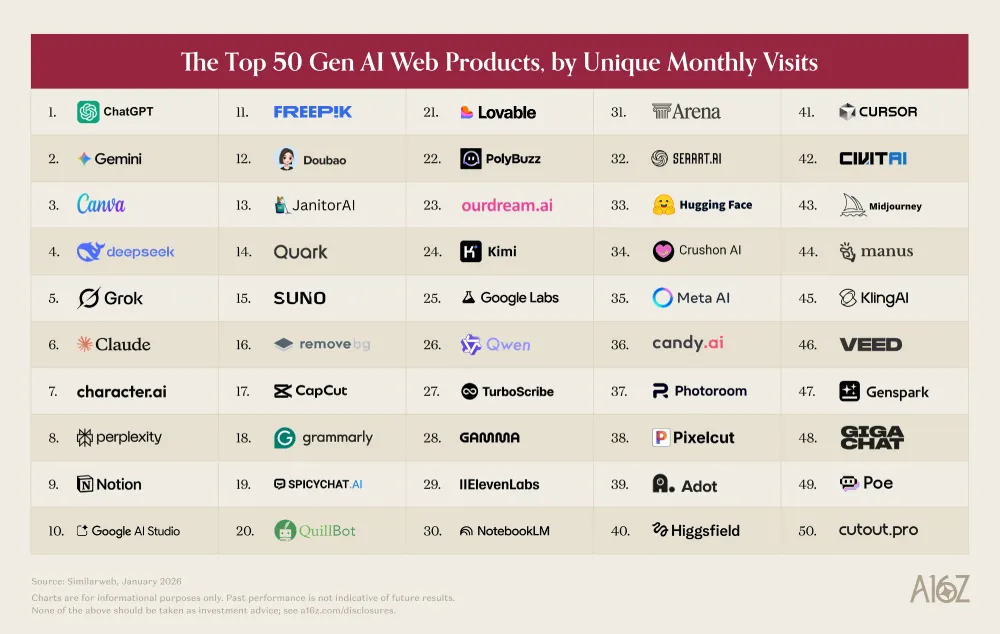
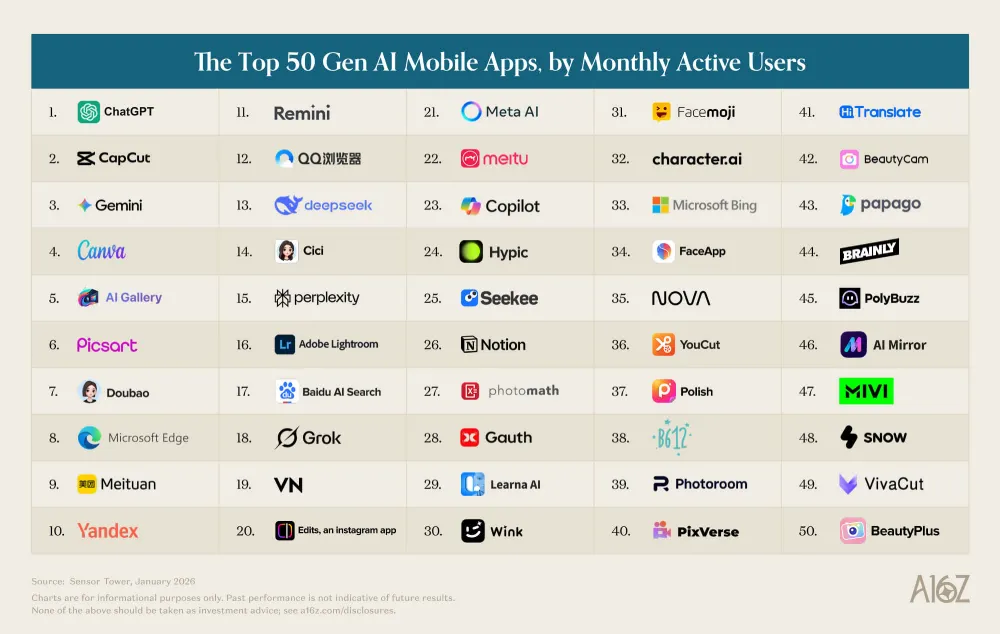
Then there’s the money race below the surface. Anthropic’s Claude saw paid subscriptions grow over 200% year over year. Claude Code, its developer tool, reportedly crossed a $1 billion annualized revenue run rate in six months.
Google’s Gemini grew paid users by 258%, partly thanks to a creative image model called Nano Banana that cranked out 200 million images in its first week and pulled 10 million new users through the door. OpenAI is responding by trying to turn ChatGPT into a super-app, bolting on 85 integrations from Expedia to Zillow to Instacart.
The geography is shifting too. Western tools still dominate in the US, India, and Brazil, but Yandex Browser cracked the global top ten mobile apps with 71 million users. DeepSeek is pulling serious traffic in China, Russia, and surprisingly, the US. And OpenClaw, which started as someone’s side project in January, somehow overtook Linux and React to become the most-starred repository in GitHub history.
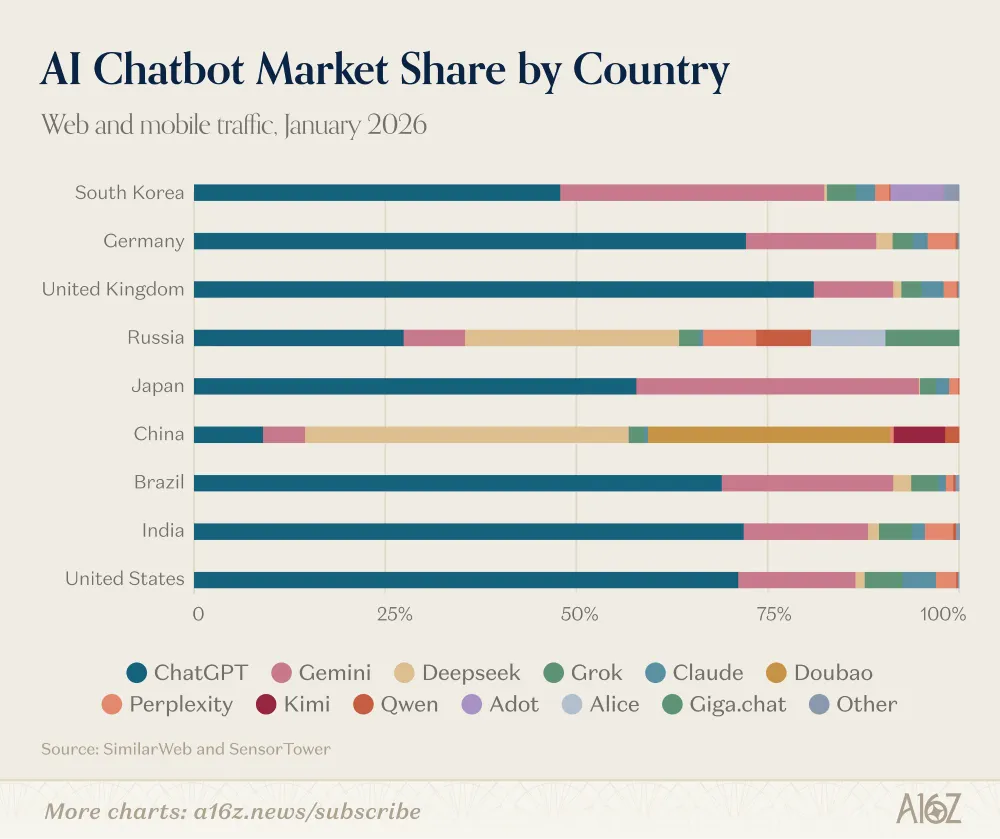
Not everyone bought the rankings at face value. Lenny Rachitsky highlighted some genuine surprises on X, noting that Perplexity ranked higher than expected and that three AI companion chatbots landed in the top 20. But he also spotted the blind spot: the list doesn’t count desktop app usage at all. That likely hammers Cursor’s placement, since almost nobody uses a code editor in a browser.
“Given how many of these have desktop/mobile apps I feel like this ranking is as inaccurate as it can get,” wrote Dan Liu.
That seems like fair criticism. But the bigger takeaway still holds. AI usage isn’t a niche thing anymore. It’s buried inside the video editor your teenager uses, the note-taking app your coworker swears by, and a Russian browser you’ve never heard of. Most of these people probably wouldn’t even say they use AI. They just use their apps, and the apps changed around them.
Featured image generated with AI
TechIssuesToday primarily focuses on publishing 'breaking' or 'exclusive' tech news. This means, we are usually the first news website on the whole Internet to highlight the topics we cover daily. So far, our stories have been picked up by many mainstream technology publications like The Verge, Macrumors, Forbes, etc. To know more, head here.



Dwayne Cubbins
1442 Posts
For nearly a decade, I've been deciphering the complexities of the tech world, with a particular passion for helping users navigate the ever-changing tech landscape. From crafting in-depth guides that unlock your phone's hidden potential to uncovering and explaining the latest bugs and glitches, I make sure you get the most out of your devices. And yes, you might occasionally find me ranting about some truly frustrating tech mishaps.


Comments
Follow Us

