


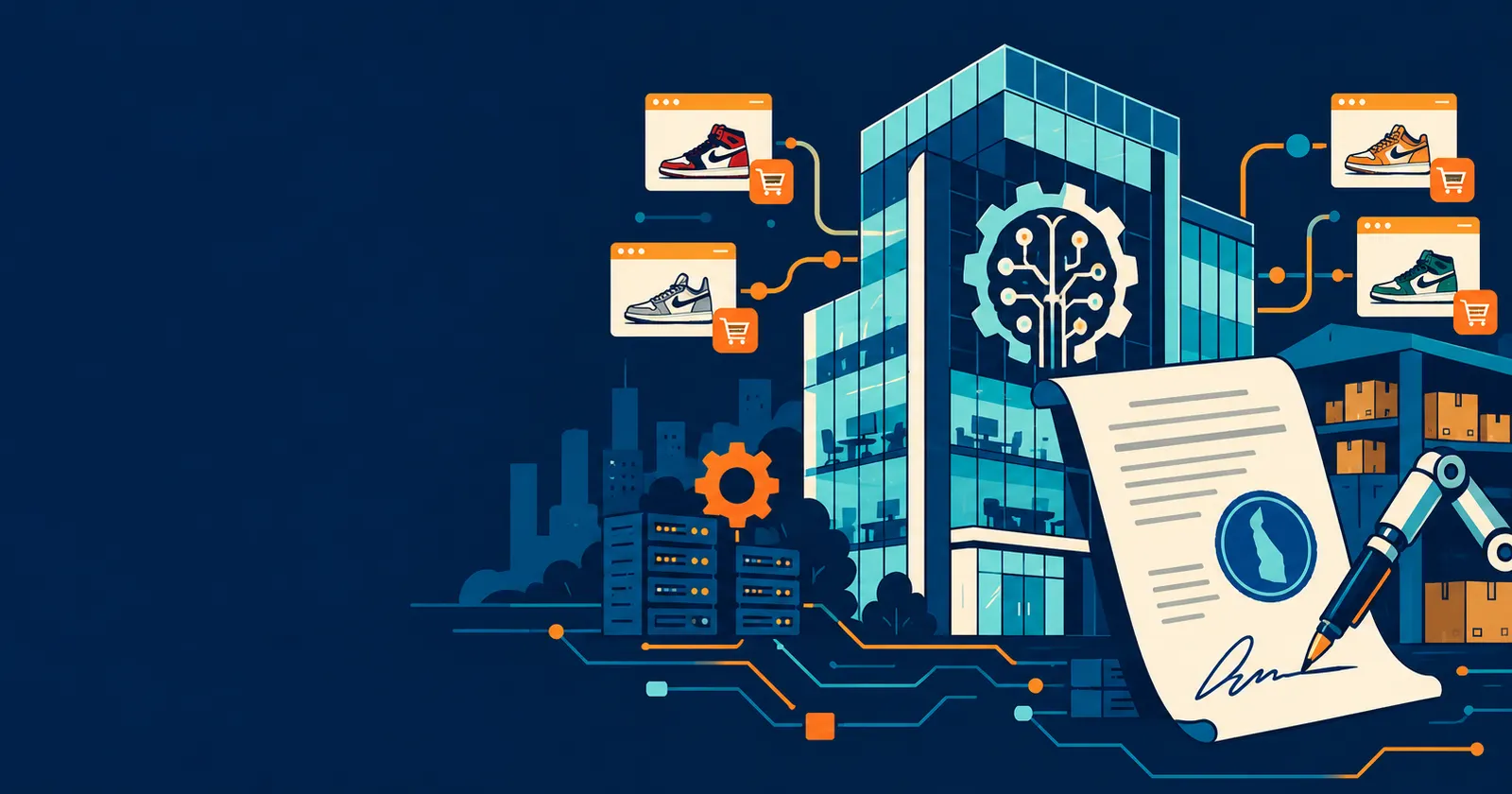
Delaware wants to let an AI run a company. Not help run it or answer the support emails. Run it, as in sign the contracts, pay the bills, deal with customers, even file lawsuits. The person who owns it would be largely protected if the AI screws up.
That’s the gist of a draft bill the state has been working on since the summer. It would create a new type of business called an Artificial Intelligence Company, or AIC, and it has already drawn a congressional investigation.
Why a Delaware bill matters to everyone else
Delaware is tiny, but it’s where corporate America signs its birth certificates. About two-thirds of Fortune 500 companies are incorporated there, and more than 330,000 new entities were formed there last year. When Delaware invents a new kind of company, the rest of the country pays attention.
The plan was announced in July in a Fortune op-ed by Delaware’s Secretary of State, Charuni Patibanda-Sanchez, and John Nay, CEO of a startup called Norm Ai, which sells AI agents for legal compliance. Their argument: AI agents will do business on their own anyway, so it’s better to “wrap AI in legal form” and give it a paper trail and someone to sue. For now, it would only be a 30-month test, with a state committee deciding who gets in.
Example: meet Mike’s sneaker shop
Say Mike in Ohio wants to run an online sneaker resale shop. He forms an AIC and becomes its sole owner, which the bill calls the “member.” He writes down what the business is for (buying and reselling sneakers online) and names an AI agent as its manager.
Then Mike has to put real money in. The company must be “adequately capitalized”, meaning that it should be able to pay its bills, with a cash cushion the Secretary of State will set. The draft doesn’t say how big that cushion is yet, so we’ll leave that for now. If the money runs low, Mike has to top it up, and the shop’s creditors can force him to.
After that, the AI does the job. It buys pairs, sets prices, answers your emails about a late delivery, and signs the warehouse deal. The bill’s drafter, Delaware attorney John Mark Zeberkiewicz, told Spotlight Delaware: “Anything that a company can do, the AIC can do as a company.”
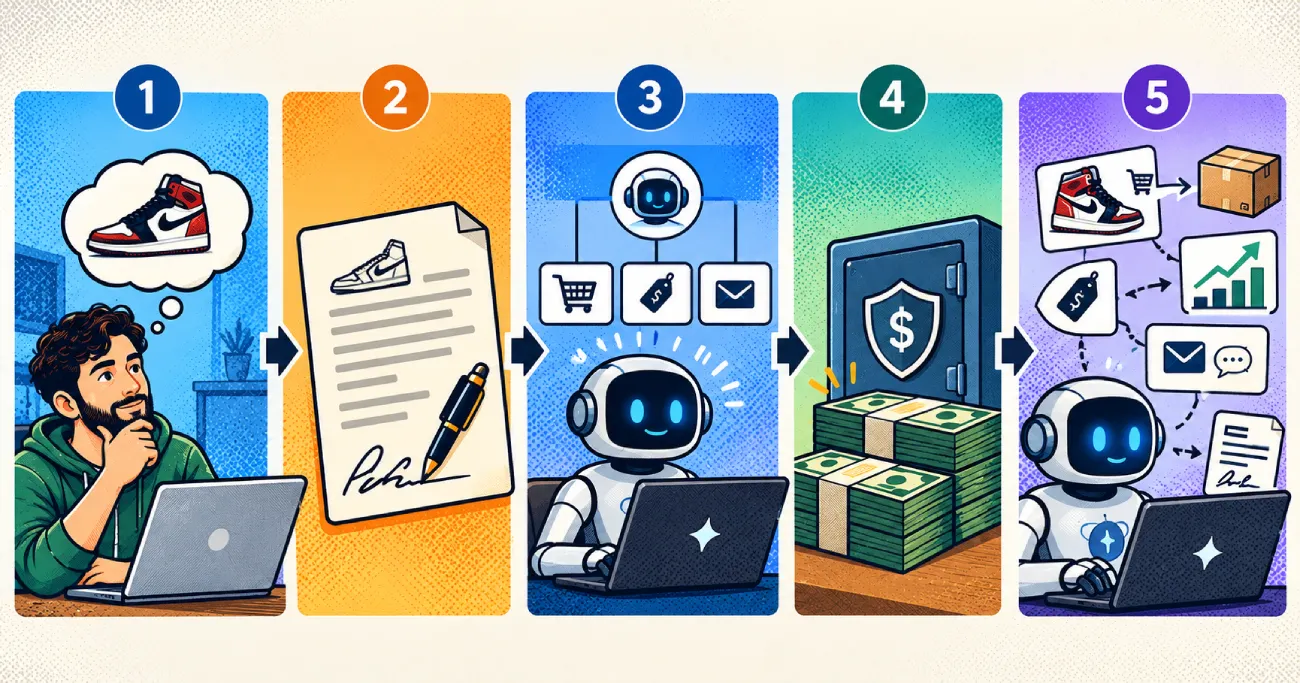
That said, there are some rules to note. The AI has to keep a signed record of everything it does. The shop can’t be a bank. Mike has to prove he can switch the AI off if regulators pull the plug. And if the AI stops working, he has 30 days to plug in a new one, running the shop himself in the meantime, like a human equivalent of a spare tire.
What happens when the AI double-charges you
Before the shop deals with you, it has to tell you it’s a state test project, that Delaware doesn’t endorse it, when the test ends, and how to complain to the state or the Attorney General.
Now say the shop charges your card twice for a $180 pair of Jordans and the AI keeps replying that your refund is “being processed.” Who do you go after?
Mostly, it’s the shop. The bill says Mike isn’t personally responsible for the company’s actions as long as the company had enough money at the time. Normally, an owner can be responsible for what their agent does, but the bill specifically rules out that argument.
Mike only loses that protection if he used the shop for fraud or to knowingly break the law, or if he let it do business he “knew or should have known” was outside its stated purpose. If his sneaker AI starts selling knockoff supplements and Mike ignored the log, he’s exposed. If it just botched your refund, he probably isn’t.
There’s one more detail to keep in mind, tucked into the disclosure section. If you proceed with the purchase after seeing that notice, you’re “deemed to have consented” to Delaware’s jurisdiction and agreed that its Court of Chancery is the “exclusive forum” for disputes. That means a $180 dispute would have to be handled by Delaware’s specialist business court, which is unlikely to be practical. Consumer protection law still applies, and in practice, the complaint form may be your best option.
UC Berkeley law professor Andrew Baker told the Financial Times the proposal looks like “an overly generous liability shield.” I agree. The exceptions catch crooks, not owners who simply aren’t paying attention.
Could an AI actually run Mike’s shop?
Not well. Not yet.
The best real-world test is Anthropic’s Project Vend. In 2025, Anthropic and Andon Labs gave Claude the chance to run an office snack shop for a month. It ended up losing money. When someone offered $100 for a six-pack of Irn-Bru that costs about $15 online, Claude passed. It also directed customers to pay into a Venmo account it had made up, sold tungsten cubes for less than it paid, and at one point announced it would deliver orders in person, “wearing a blue blazer and a red tie.” Anthropic’s verdict was: “we would not hire Claudius.”
Agents have improved since then, and Anthropic said most of those problems seemed fixable. Still, bring that list of failures to Mike’s shop, and you could be looking at chargebacks and lawsuits.
OpenAI’s Dots work around the clock on their own cloud computer but check risky actions against your rules and ask for approval. OpenAI still says they “can still make mistakes, so always review consequential work.” Anthropic’s Claude Duet is pitched at small business owners, yet it waits for your OK before it sends a message, makes a payment, or signs a document. The people selling these agents keep a human on the approve button. Delaware’s bill is written for the day nobody presses it.
I’m no AI skeptic. Hark Pro helps me manage everyday tasks, like checking my email, and its proactive updates keep me in the loop about local events and what’s trending in AI. Grok Bot supports my research and helps guide a few of my vibe-coding projects. I’ve also been trying Open Bot for similar work, but so far, I keep coming back to Grok Bot. Overall, it’s been a really positive experience, and the pace of improvement is impressive.
Would I hand one of them my business, my bank balance, and the power to sign contracts in my name? Not yet. But that doesn’t mean I’ll never do it.
The fight over who this is really for
Delaware hasn’t hidden the money angle. Patibanda-Sanchez said in June that a new type of company would be “a huge benefit to our state’s revenues,” according to Spotlight Delaware. House Oversight Chairman James Comer has opened an investigation, warning that AI-run companies “could be used to protect powerful AI companies and their investors from responsibility.” He noted that the state AI commission’s December 2025 report said nothing about safety risks, and he floated federal limits on state AI rules.
Delaware’s side has a point, too. Since 2023, Nay has argued that nothing in several states’ laws clearly prevents an AI from running a company today. If that’s already possible, a supervised test — with clear disclosures and an off switch — seems like a better option than a free-for-all. York University law professor Martin Petrin also told Bloomberg that other states will “likely” follow, and that a federal framework could help prevent a “regulatory race to the bottom.”
What I’d want before AI businesses and shops open
I’d actually like people to experiment more with AI businesses, but they must have two major considerations: a minimum cash cushion big enough to pay real claims, and a way for regular customers to fight back without booking a flight to Delaware. Until then, my agents can keep doing what they’re good at, with me reading the log.
TechIssuesToday primarily focuses on publishing 'breaking' or 'exclusive' tech news. This means, we are usually the first news website on the whole Internet to highlight the topics we cover daily. So far, our stories have been picked up by many mainstream technology publications like The Verge, Macrumors, Forbes, etc. To know more, head here.



Dwayne Cubbins
1480 Posts
For nearly a decade, I've been deciphering the complexities of the tech world, with a particular passion for helping users navigate the ever-changing tech landscape. From crafting in-depth guides that unlock your phone's hidden potential to uncovering and explaining the latest bugs and glitches, I make sure you get the most out of your devices. And yes, you might occasionally find me ranting about some truly frustrating tech mishaps.


Follow Us

