


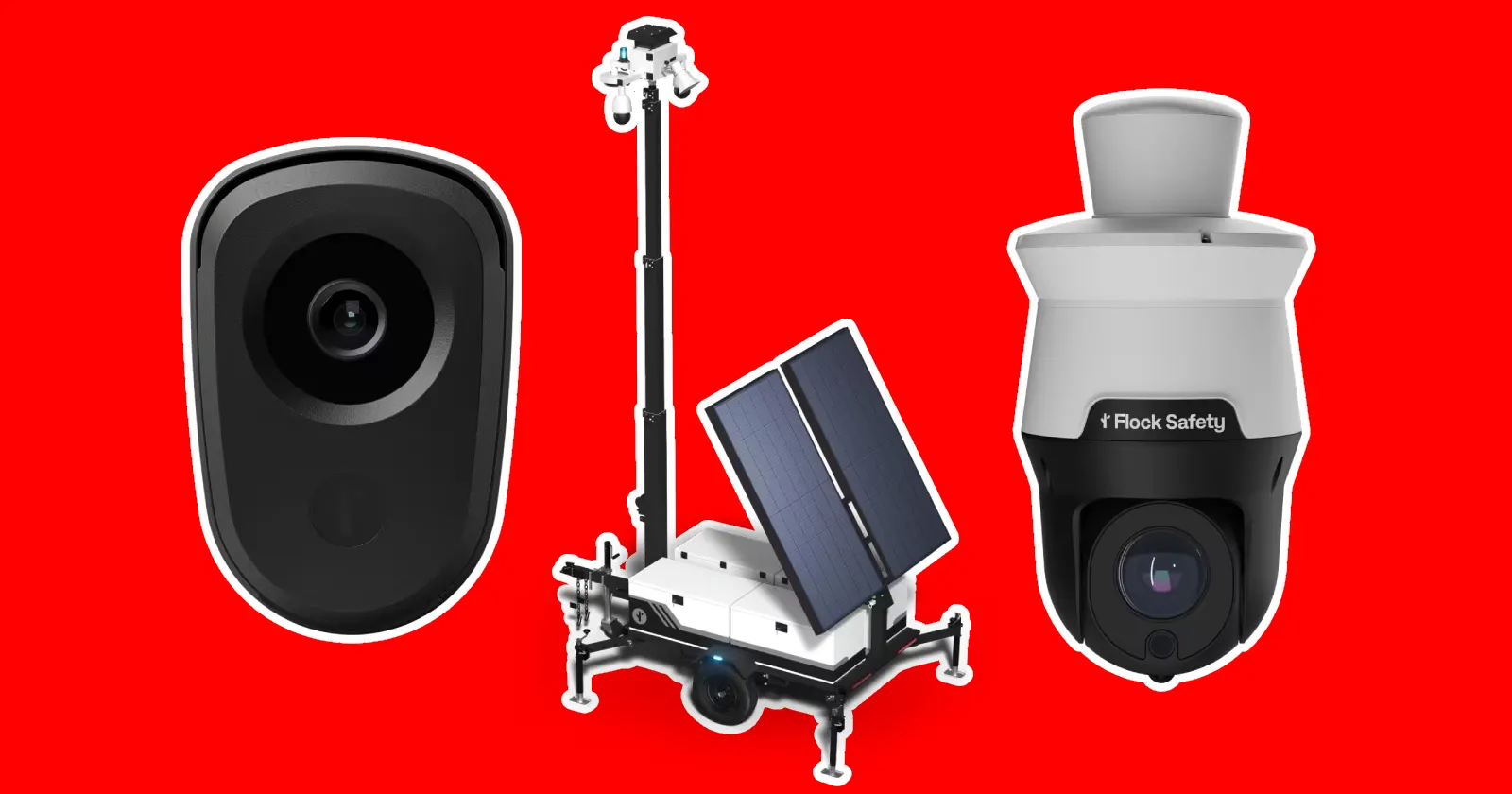
If you’ve driven anywhere in the US lately, there’s a good chance a Flock camera logged your car. This week, I am seeing the fight over those cameras play out very differently from town to town.
In Thackerville, Oklahoma, police started putting covers over their Flock cameras on Monday after ending the contract. In Romulus, Michigan, the city council voted 4-3 against a formal investigation into a Flock deal that, as Local 4 reported, was listed on an agenda as “not to exceed $47,500” but signed the next day at $90,000 a year for three years.
The mayor blamed a clerical typo and promised an internal audit. In Atlanta, students at the Atlanta University Center held a protest and camera “tour” with the Georgia ACLU. Even Wisconsin’s race for governor has turned to Flock. Democrat David Crowley said Milwaukee County wants “guardrails” and transparency, or “these cameras will no longer be running.” Republican Tom Tiffany wants to cut off state shared revenue for Flock and set up a study committee, saying people’s data shouldn’t be “shipped to communist China.” On this, both sides sound alike.
Meanwhile, Flock’s CEO Garrett Langley told a room of police chiefs on Sunday that the backlash isn’t real. In leaked audio obtained by 404 Media, he claimed, without evidence, that online opposition is mostly paid bots, and said protests are “the same people with the same signs and the same message.”
From HOA gates to a national lookup network
Flock Safety was founded in 2017 in Atlanta by three Georgia Tech graduates. Its early pitch was cheap, solar-powered license plate cameras for homeowners associations. Police departments followed. By Flock’s own figures, it now operates in more than 5,000 communities, and 404 Media puts its national network at around 80,000 cameras.
The cameras are automated license plate readers (ALPRs). They snap still images of every passing vehicle and log the plate, make, color, time and location. Flock calls the extra detail a “Vehicle Fingerprint,” which lets police search for things like a model or even bumper stickers when there’s no plate.
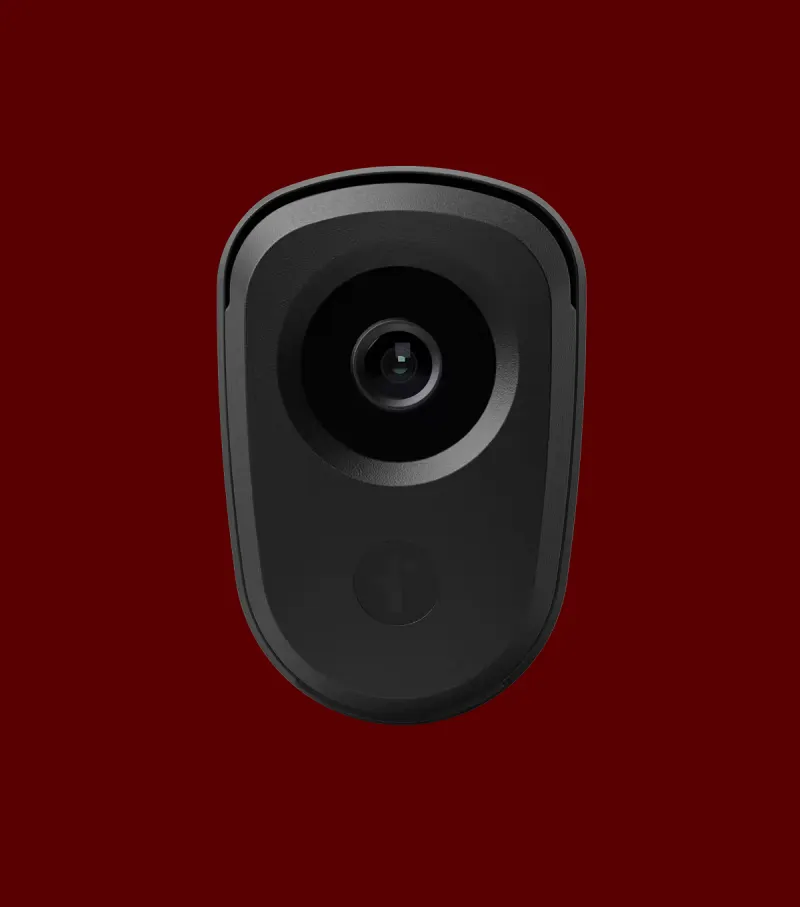
The thing that sets Flock apart is that an agency can opt into statewide and national networks, which let an officer in one state search cameras in another. Sen. Ron Wyden wrote in October 2025 that Flock told his office 75% of its law enforcement customers had enrolled in the “National Lookup Tool,” partly because you only get to search others if you share your own data.
How it went from niche to national controversy
Most of the anger traces back to a run of reporting in 2025:
- 404 Media found that local police were running searches with reasons like “ICE” and “immigration,” even though Flock had no contract with ICE.
- 404 Media also reported that a Texas officer searched cameras nationwide for a woman who had an abortion. Flock and the sheriff said it was a welfare check, but the EFF later obtained records showing it was a death investigation that gathered abortion-related evidence.
- An Illinois Secretary of State audit found Flock lacked proper safeguards and that U.S. Customs and Border Protection had accessed Illinois data through a pilot. Flock then paused its federal pilots nationwide. Wyden’s letter says CBP and Homeland Security Investigations ran roughly 200 and 175 searches during that pilot.
Austin let its contract expire, and Evanston canceled, then ordered Flock to remove cameras the company had reinstalled. In Atlanta, Clark Atlanta doctoral student Ladavious McNair spent 30 days in jail after police used Flock data to identify the wrong man in a road rage shooting. He is now suing the city.
What’s true and what isn’t
Claims are flying around on both sides, so after reading dozens of articles, here’s what I found that is actually supported by evidence.
“Flock cameras scan your face.” Not the license plate readers. Flock says its LPR cameras don’t use facial recognition or identify drivers, and nobody has shown otherwise. But Flock also sells video products with AI features, including people detection alerts and a text-based footage search, as the Michigan Daily notes. “No facial recognition” is not the same as “no people in the footage.”
“Flock hands your data to ICE.” This is mostly misleading, but not baseless. Flock says it has no ICE contract and excludes federal agencies from its shared networks. The problem has been local police running lookups on ICE’s behalf, plus the federal pilot that Flock’s own leadership reportedly didn’t know about, according to the Illinois audit. So your data’s exposure depends heavily on which agencies your local police share with.
“Cities own the data, and it’s deleted quickly.” Partly true. Flock says customers own their data and set retention. The old default was 30 days, and in August Flock cut its recommendation to seven days. But a recommendation isn’t a rule, and state laws vary. Minnesota allows up to 60 days.
“Canceling the contract makes the cameras disappear.” This is where KARE 11’s reporting is useful. The cameras belong to Flock, so cities can’t always just rip them out. In Plymouth, Minnesota, police physically unplugged cameras while waiting for pickup. In Dayton, Flock reinstalled a camera after the city put the program on hold. Flock says it’s “responsible for removing our cameras” and timelines vary. A covered or unplugged camera is still Flock’s property on a pole. Data already collected stays until the retention period runs out, and an EFF attorney told The Verge that what happens to data after a contract ends “appears to be unresolved.”
“These cameras solve tons of crime.” The success stories are real, but most come from police departments and Flock itself, including Flock’s own case studies like a recent Valdosta, Georgia arrest. Independent research is thinner. A National Institute of Justice review of plate readers as a deterrent found no significant drop in crime, though some studies tie fixed cameras to more stolen car recoveries and arrests. All in all, the claim that it “helps in some investigations” is supported, but the claim that it “drives crime down” is not proven.
Why police still want them
Officers like the tool because it turns a partial plate or a car description into a lead in minutes. In Romulus, one council member argued that if a Flock camera helped get your child back, “your attitude would change,” and the mayor pointed to the 30 million travelers who pass through Detroit’s airport. Even Crystal, Minnesota’s police chief, while dropping Flock, said it had been “beneficial in solving crimes.”
Courts haven’t settled the legal question either. In January, a federal judge ruled that Norfolk, Virginia’s 176-camera network was constitutional, while noting that it could cross the line as these networks grow. The plaintiffs are appealing. One plaintiff’s car was logged 475 times in just four months.
Where this leaves you
My take is that the debate isn’t really about whether plate readers work; it’s about who gets to set the rules. Since the 2025 reporting, Flock has added search filters, case codes, and mandatory audits — a meaningful step forward. Still, nearly all of these safeguards depend on local agencies choosing to turn them on.
If you want to know where your town stands, ask three things: Does your police department share with the national network? What is its retention period? Does it publish a Flock transparency portal? The answers tell you far more than whether a camera is on your street.
TechIssuesToday primarily focuses on publishing 'breaking' or 'exclusive' tech news. This means, we are usually the first news website on the whole Internet to highlight the topics we cover daily. So far, our stories have been picked up by many mainstream technology publications like The Verge, Macrumors, Forbes, etc. To know more, head here.



Dwayne Cubbins
1478 Posts
For nearly a decade, I've been deciphering the complexities of the tech world, with a particular passion for helping users navigate the ever-changing tech landscape. From crafting in-depth guides that unlock your phone's hidden potential to uncovering and explaining the latest bugs and glitches, I make sure you get the most out of your devices. And yes, you might occasionally find me ranting about some truly frustrating tech mishaps.


Follow Us

