










It has been a chaotic 24 hours for PayPal’s Honey extension. Just as the company was reportedly scrambling to update its code, one of the world’s largest affiliate networks slammed the door shut. Rakuten Advertising has officially terminated Honey from its network, effective immediately, citing quality concerns that insiders say are directly linked to the ongoing fraud allegations.
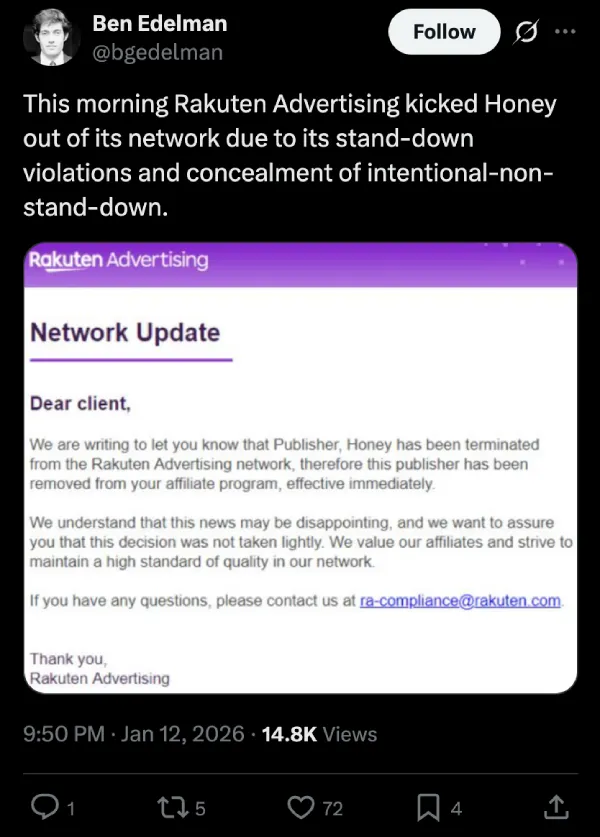
The news broke when a “Network Update” email began circulating among merchants, informing clients that “Publisher, Honey has been terminated.” The straightforward notice stated that the decision “was not taken lightly” but was necessary to maintain a “high standard of quality” in their network.
Harvard researcher and ad-fraud expert Ben Edelman added context to the sudden firing, stating on X that Rakuten kicked Honey out specifically due to “stand-down violations and concealment of intentional-non-stand-down.”
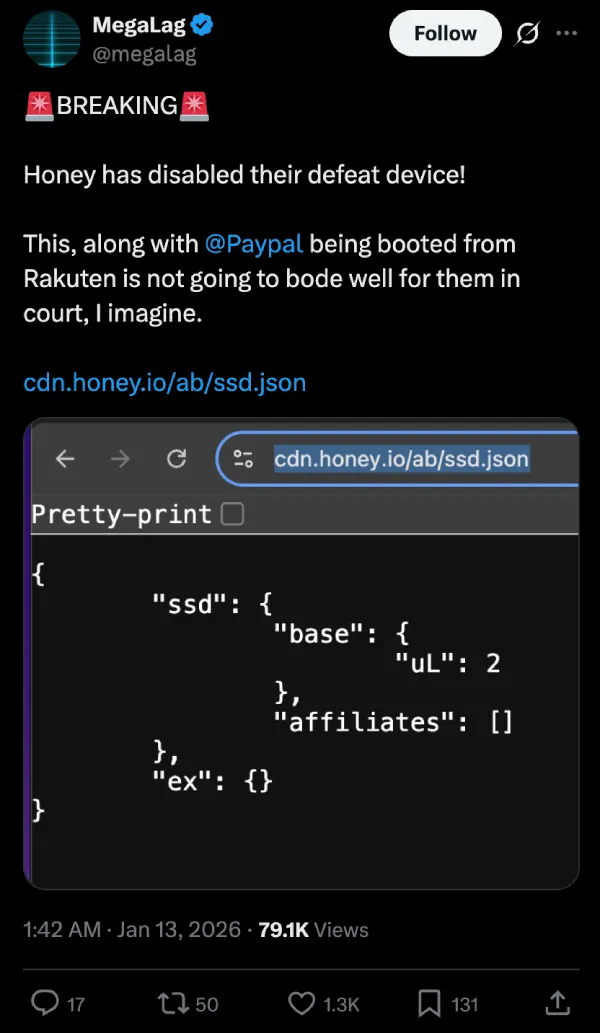
This termination is a massive blow, potentially cutting Honey off from thousands of merchants. But the timing of the fallout is what makes this story truly wild. According to YouTube investigator MegaLag, Honey disabled their controversial “defeat device” almost exactly when the ban hammer came down.
Their post showed that the configuration file responsible for the “Selective Stand Down” (SSD) logic had been changed, effectively turning off the mechanism that allegedly helped Honey dodge compliance testers.
Stranger still, the company’s public metrics seem to defy the gravity of the situation. Developer Jelte noted that despite the lawsuits and a recent flood of one-star ratings, Honey’s user count on the Chrome Web Store suspiciously jumped from 12 million to 14 million this week, a growth anomaly that MegaLag described as simply “off.”

If you have been following our coverage, you know this “defeat device” was the smoking gun. We recently reported on how MegaLag’s investigation revealed Honey checks your Device ID to decide whether to break affiliate rules.
The allegation was that Honey would behave perfectly for testers but aggressively poach commissions from regular users. By disabling this feature now, it looks like PayPal might be trying to clean up the mess, but for Rakuten, it was clearly too little, too late.
All of this seems like a chaotic confirmation of what was revealed last year when MegaLag exposed the dark side of the Honey browser extension. Although PayPal appears to be trying to clean up the situation now, the optics are poor. As MegaLag noted, the combination of the Rakuten ban and the quick removal of the defeat device “won’t look good for them in court.”
TechIssuesToday primarily focuses on publishing 'breaking' or 'exclusive' tech news. This means, we are usually the first news website on the whole Internet to highlight the topics we cover daily. So far, our stories have been picked up by many mainstream technology publications like The Verge, Macrumors, Forbes, etc. To know more, head here.



Dwayne Cubbins
1453 Posts
For nearly a decade, I've been deciphering the complexities of the tech world, with a particular passion for helping users navigate the ever-changing tech landscape. From crafting in-depth guides that unlock your phone's hidden potential to uncovering and explaining the latest bugs and glitches, I make sure you get the most out of your devices. And yes, you might occasionally find me ranting about some truly frustrating tech mishaps.


Follow Us

