


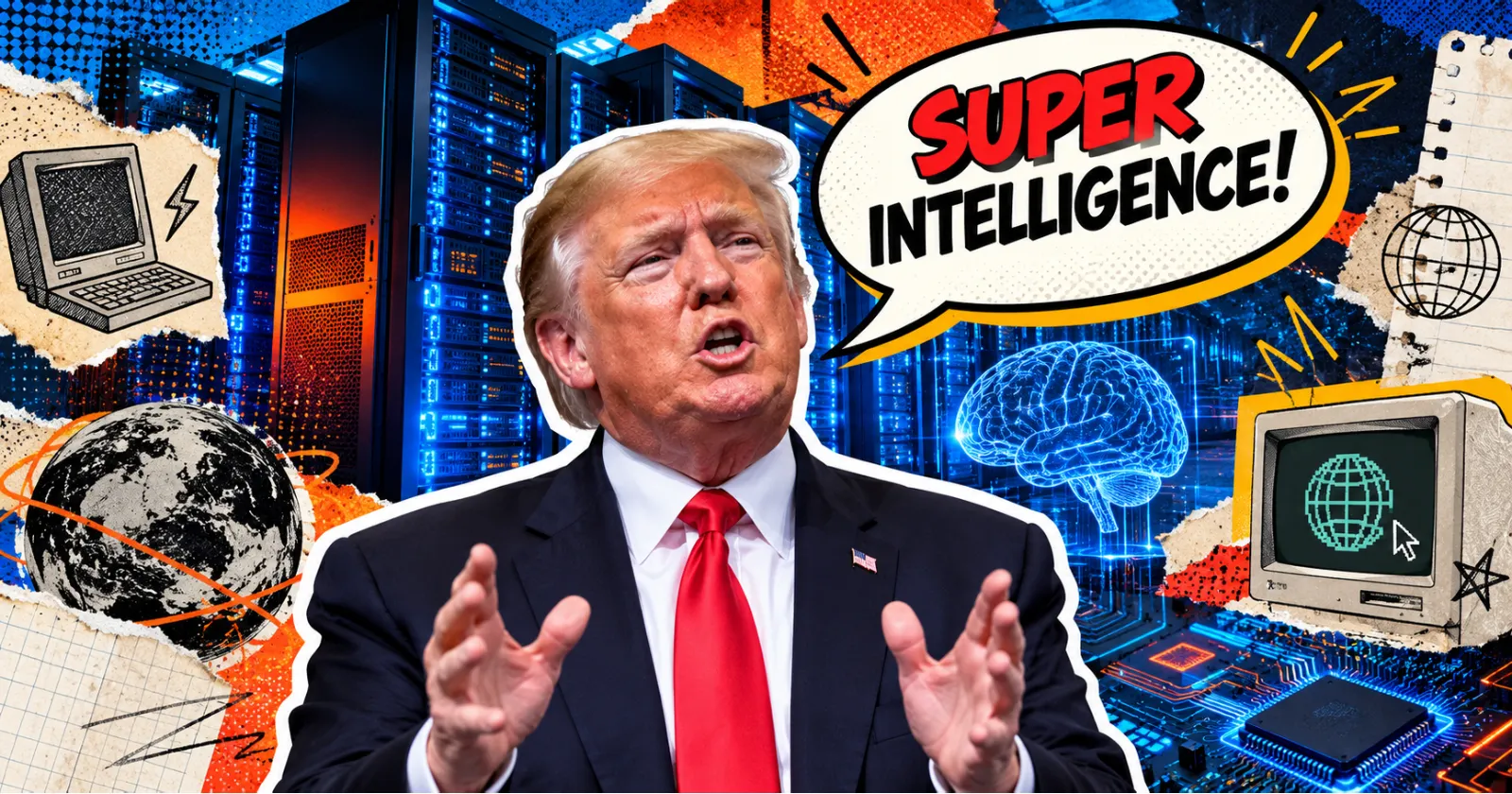
Trump just called ‘Artificial Intelligence’ “a very bad and inaccurate name,” scolded The Wall Street Journal for still using it, and promised that “in short order, we will be officially BANNING the term, ‘AI/Artificial Intelligence,’ in all relevant documents, and everything else, due to its inaccuracy.”
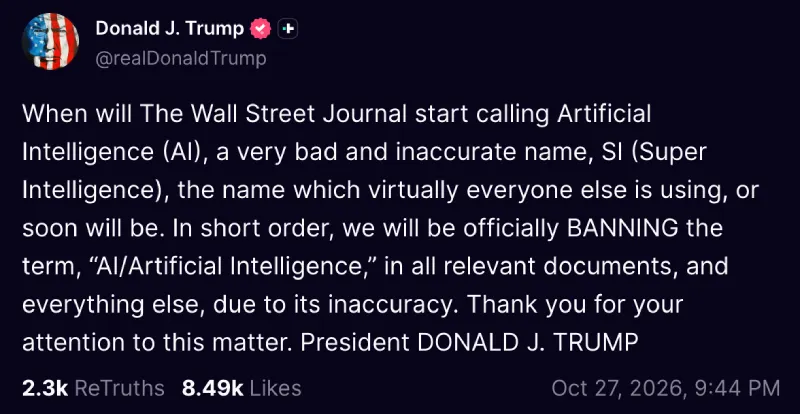
But this whole drama is not new. A version of that ban has been in place for a month. The better question is why a president would spend this much energy on two letters a week before the midterms. After going through the order, his past remarks, and the reactions, I think there’s more than one answer.
What has actually been ordered
On September 29, Trump signed Executive Order 14434, “Inaugurating the Era of Super Intelligence”. It tells federal agencies to use “Super Intelligence” and “SI” instead of “Artificial Intelligence” and “AI” in official correspondence, public communications, websites, reports, and policy documents, “to the maximum extent permitted by law.”
That said, it’s worth pointing out the fine print:
- It only covers the executive branch. It does not apply to companies, newspapers, or you.
- Old regulations, contracts, grants, and historical documents don’t have to be rewritten.
- “SI” legally means exactly what “AI” already means under existing federal law (15 U.S.C. 9401).
- The president’s science adviser had 60 days to propose legislative language for a new federal definition. That deadline lands at the end of November, and any change to the law itself would need Congress.
So “everything else” extends beyond the order itself. Axios also noted that the order sets no penalty, and that the White House’s own science office website still said “artificial intelligence” after the order was signed. Here’s a screenshot of the page as it appeared on October 8, cached on the Wayback Machine:
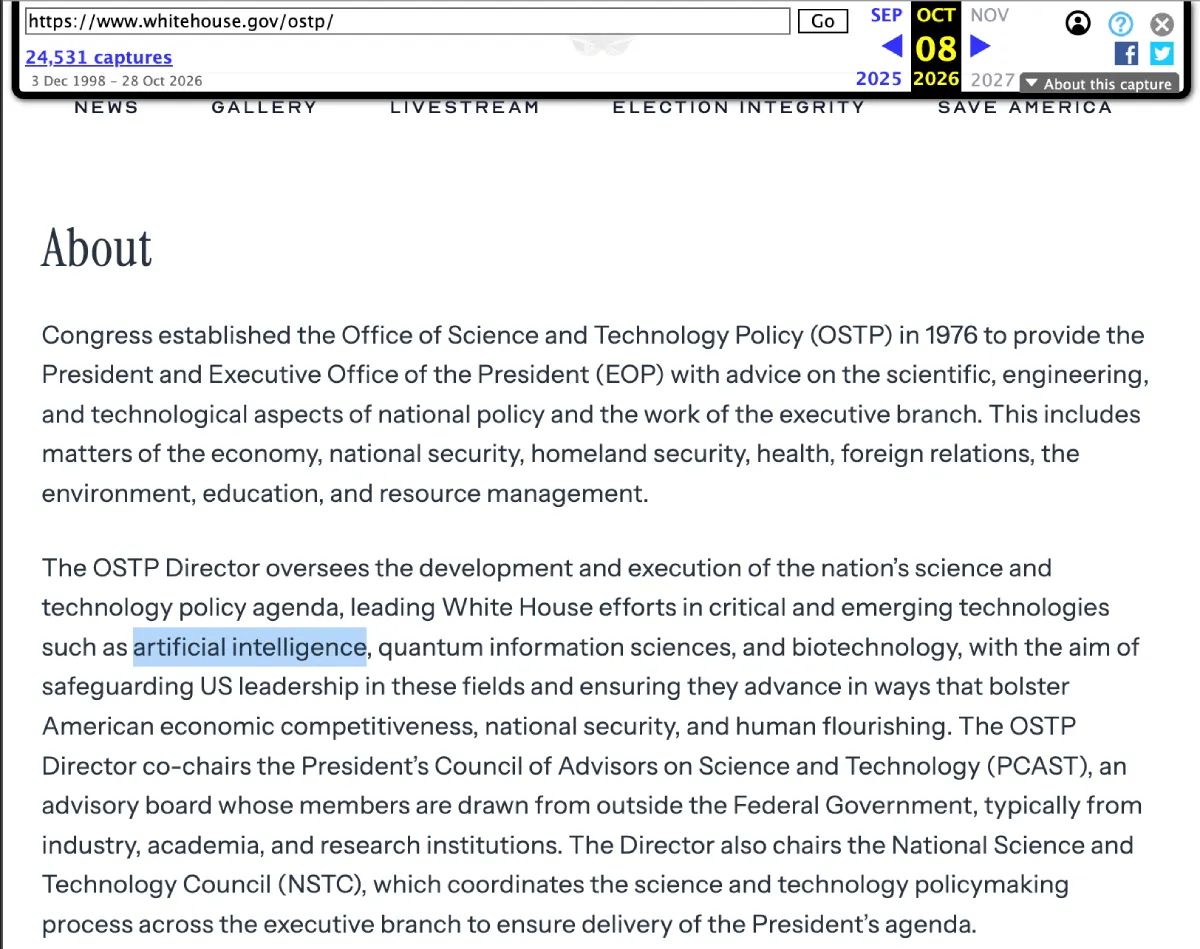
The page has since then been updated to say “super intelligence.”
He has hated the word “artificial” for over a year
If you think Trump woke up a few weeks ago hating the word “artificial,” you’d be wrong. At the July 2025 AI summit where he unveiled the AI Action Plan, Trump went off-script. According to the official transcript, he said: “I don’t like anything that’s artificial. So could we straighten that out, please? We should change the name. [Laughter] I actually mean that… it’s not artificial. It’s genius.”
The room laughed. Fourteen months later, it’s an executive order. At the UN General Assembly in September, he told world leaders that “the use of the word artificial makes intelligence sound fake,” as The Hill reported. On October 8, he posted that anyone using the old term is “THE ENEMY!”
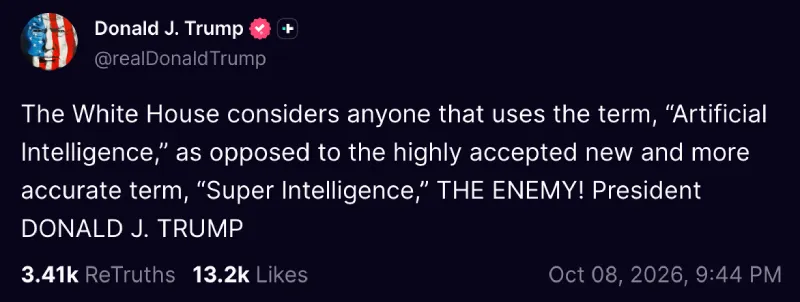
So yes, he simply doesn’t like the word. I don’t think that’s the whole story.
Reason one: Trump has always sold names
Before politics, Trump’s biggest asset was his name, licensed onto buildings and products. He knows what you call something shapes how people feel about it.
In office, he has turned that instinct into policy. His first day back brought the order renaming the Gulf of Mexico to the Gulf of America and Denali back to Mount McKinley. In September 2025, the Pentagon got “Department of War” as a secondary title.
“Artificial” sounds fake. “Super” sounds like a product you’d want to buy.
Reason two: AI has a popularity problem right before an election
This is the explanation that actually makes sense. As a recent CNN analysis pointed out, Trump can’t easily get voters to love noisy, power-hungry data centers — so he’s leaning into the one lever he can always pull: giving them a shiny new label.
His administration has also bet big on AI. It revoked Biden’s AI order on day one, launched the Stargate infrastructure push, released the AI Action Plan, and moved against state AI rules. If the technology at the center of your economic pitch has a bad reputation, renaming it is cheap.
That said, some experts claim “superintelligence” already means something specific, and it’s scarier. Geoffrey Hinton told The Guardian, as quoted by HuffPost, that the term means “smarter than people,” and “you can’t make it smarter than people just by calling it smarter than people.” Nick Bostrom, who wrote the book on superintelligence, told CNN it’s “a little bit of a stretch” to call a spam filter a superintelligence. Even Sam Altman asked whether it really sounds “less scary.”
Reason three: it quietly helps the “no guardrails” argument
Bostrom made a point to CNN that I think deserves more attention. If everything we already have is “superintelligence,” and nothing terrible has happened, the warnings about future superintelligent systems start to sound overblown. You’d need a brand-new word to describe the real risk.
I can’t say that’s deliberate, but it lines up with Trump’s stated view. In September, he wrote that the only guardrail AI needs is “a STRONG AND SMART (High IQ!) PRESIDENT,” per CNN. My guess is the White House sees this as a two-for-one: the tech sounds impressive, and the safety crowd loses its favorite word.
Reason four: a loyalty test for the tech industry
Look at who adopted the new term fastest. Elon Musk wrote “No more AI / SI / It’s better” and agreed to rename his AI division SpaceXSI.
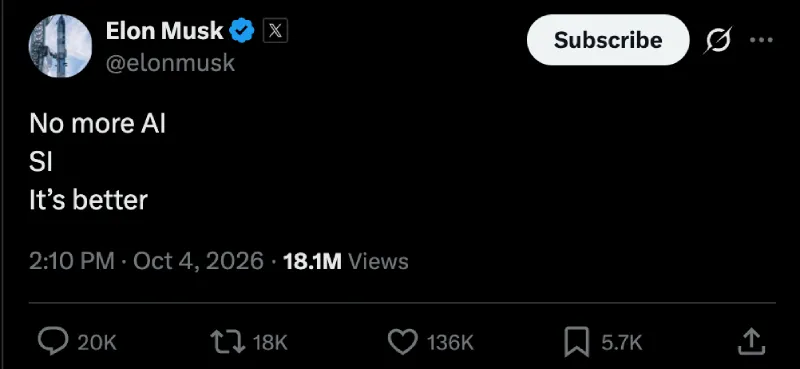
Then, even Salesforce’s Marc Benioff renamed AIForce to SIForce hours after the “ENEMY” post, Nvidia pledged money toward “super intelligence research,” and Satya Nadella has started using the phrase. Anthropic and OpenAI, on the other hand, still call themselves AI companies, and Altman said there are no plans for an “OpenSI.”
I think this is part of the point. Saying “SI” costs a CEO nothing and signals goodwill to a White House that controls chip export rules, federal contracts, and the fight over state regulation.
Reason five: the language fight is familiar territory
His team has policed vocabulary before, including the “Preventing Woke AI” order on the AI models the government buys. When the AP refused to use “Gulf of America,” it lost White House press access, and a federal judge ruled that violated the First Amendment, per The Mirror. The government can pick its own words. Forcing them on the press or private companies is a different fight.
Is it a distraction? It depends what you think it’s distracting from
“The timing” matters: Tuesday’s post came in the midterms’ final week, eight months into the Iran war, which Democrats like Barack Obama blame for rising costs.
But the sharper argument concerns AI. “He keeps rebranding because he has no real policies to put forward,” J.B. Branch of Public Citizen told HuffPost, calling it “a complete distraction” from public anxiety. At a September 29 event with tech CEOs, Trump dismissed a question about rogue AI agents — “It’s not AI, it’s SI” — and moved on, The Independent reported. The event ended with voluntary industry pledges, not rules.
Still, “pure distraction” overlooks the paper trail: a July 2025 remark, a signed order, website changes, and a definition headed to Congress. It’s both a real project and a convenient way to fill airtime that might otherwise go to harder questions.
So what does this change for you?
Practically, very little. Federal agencies now say “SI,” contractors will see it in government paperwork, and existing contracts stay as they are. Everyone else can keep saying AI, as this site does.
Watch the science adviser’s proposal, due around the end of November. If it asks Congress to redefine “AI” in law, this stops being pure branding.
My take: Trump dislikes the word, but the rebrand survives because it’s useful. It makes an unpopular technology sound like a win, softens the safety debate, and gives tech leaders an easy way to show they’re on board. So far, most people are still calling it AI and I don’t see that changing anytime soon.
TechIssuesToday primarily focuses on publishing 'breaking' or 'exclusive' tech news. This means, we are usually the first news website on the whole Internet to highlight the topics we cover daily. So far, our stories have been picked up by many mainstream technology publications like The Verge, Macrumors, Forbes, etc. To know more, head here.



Dwayne Cubbins
1479 Posts
For nearly a decade, I've been deciphering the complexities of the tech world, with a particular passion for helping users navigate the ever-changing tech landscape. From crafting in-depth guides that unlock your phone's hidden potential to uncovering and explaining the latest bugs and glitches, I make sure you get the most out of your devices. And yes, you might occasionally find me ranting about some truly frustrating tech mishaps.


Follow Us

